

Plums, Pears, and Bears: Protecting Property and Wildlife in Northwest Montana
A bear living in the Cabinet-Yaak Ecosystem in Northwest Montana may spend its time wandering through groves of ancient western red cedars, along the scenic banks of the Kootenai River, or to a gap in a fence surrounding a small orchard ripe with fruit.
This spring, People and Carnivores installed an electric fence around a yard with fruit trees for a landowner in this wild corner of the state.
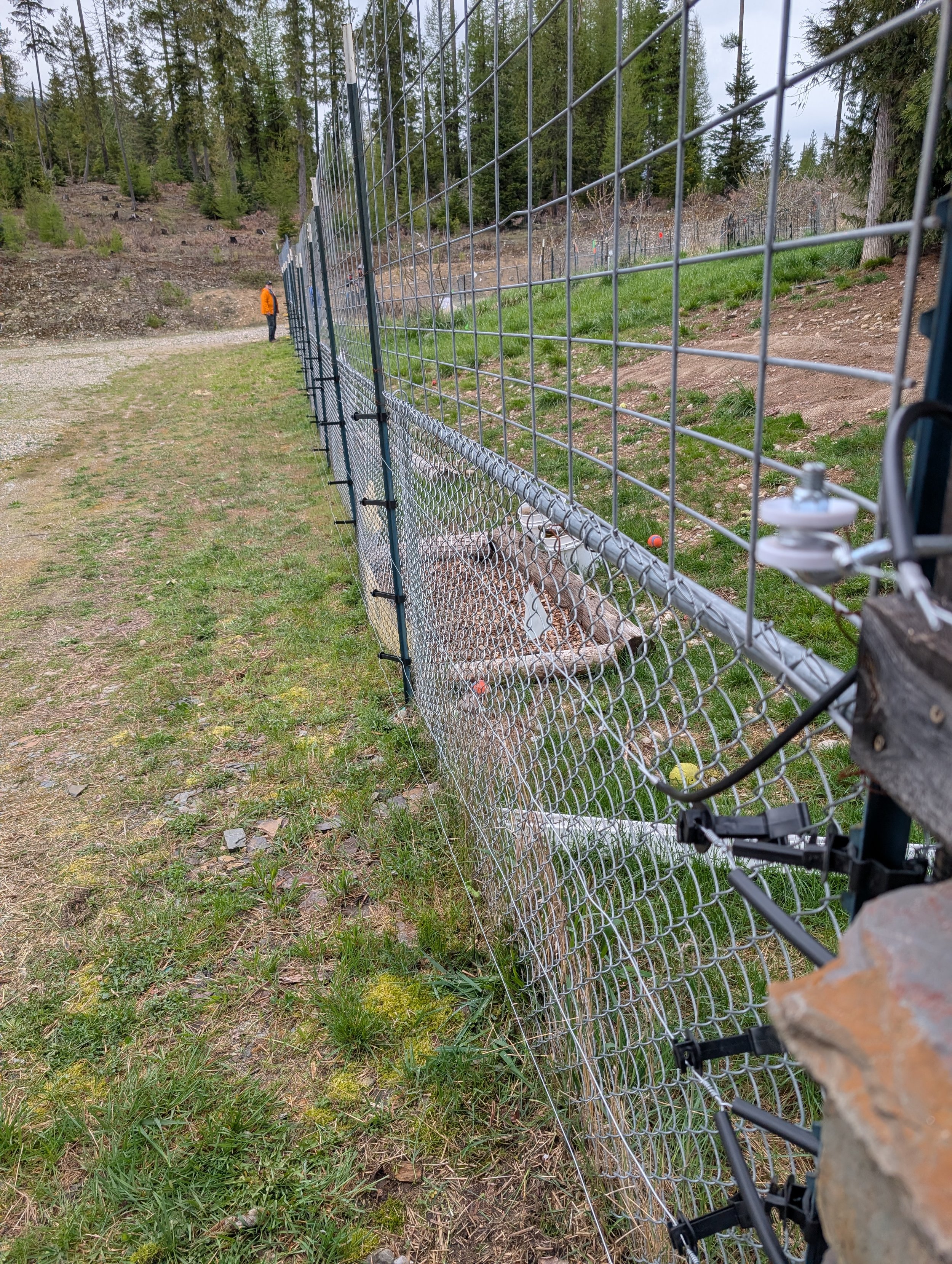
We added offset electrified wires to an existing fence to keep bears out of these fruit trees.
A tall fence surrounded most of the landowner’s yard, minus a spot with a walkway right next to the house. A few years ago, a bear made its way into the yard and cleared all the fruit from two plum trees overnight. The trees suffered enough damage that they ended up dying.
When a bear finds an easy meal like fruit tress in a yard, it can learn to seek out similar meals in the future, getting comfortable around houses and people. Not only can this lead to bears causing property damage, but the potential human-safety risk means a bear might be euthanized. Only about 50 grizzly bears live in the Cabinet-Yaak Ecosystem, meaning every grizzly in this area plays an important role in creating a healthy population. Black bears live here, too.
Things stayed quiet for the landowner for the next few years, as the fruit trees didn’t produce. But last fall, all the trees ripened at the same time. While the landowner likes living in a spot with abundant wildlife, she worried about bears coming so close to the house. So, she called the state wildlife management agency—Montana Fish, Wildlife, and Parks (FWP)—for advice.
“I didn’t know if they could do anything to help,” she recalled. “So my question was, ‘Do I pick the pears, the apples, or the plums first? How do I prioritize this?’”
FWP was out the next day with an even better solution: a temporary electric fence. Temporary fences are a great short-term tool to keep bears out of an area. They are easy to set up and take down. Some folks will use them year after year, putting them up whenever bears are awake and looking for food.
In this case, since a fence already surrounded much of the yard, and the fruit trees weren’t going anywhere, it made sense to install a more permanent solution. After diving into research on insulators and energizers, the landowner set out to find someone who knew how to build an electric fence specifically for deterring bears. She connected with People and Carnivores.
“I just felt so much better about having someone who knew about this stuff for a bear fence, rather than someone who’s never done it before,” she said.
Our Northwest Montana Conflict Prevention Specialist headed to the property to figure out details for the fence, gathered supplies, and got to work—for a little bit. After getting snowed out, he returned this spring to finish adding offset electrified wires to the existing fence.
“It was a little tricky because we had done some wonky stuff for fencing, but I’m very happy with what he did,” the landowner said. She lent a hand during the installation to be sure she knew how the fence worked and how to keep it in good working order.
Now that the fence is up, the landowner says she feels much better than last fall. While this fence brings her peace of mind, it will also make a difference for the bears that share this place.
Are you interested in an electric fence to keep bears away from your property? Contact us, or learn more through our electric fencing manual.