

Fladry Fundamentals: Insights From the P&C Team
Late winter and early spring is the time to roll out the fladry. This wolf deterrent, consisting of flagging hung from a line, is often strung around livestock pastures during calving or lambing season. We asked Ryan Wilbur, our conflict prevention specialist in Northwest Montana, to answer some questions about this tool based on his time installing it.
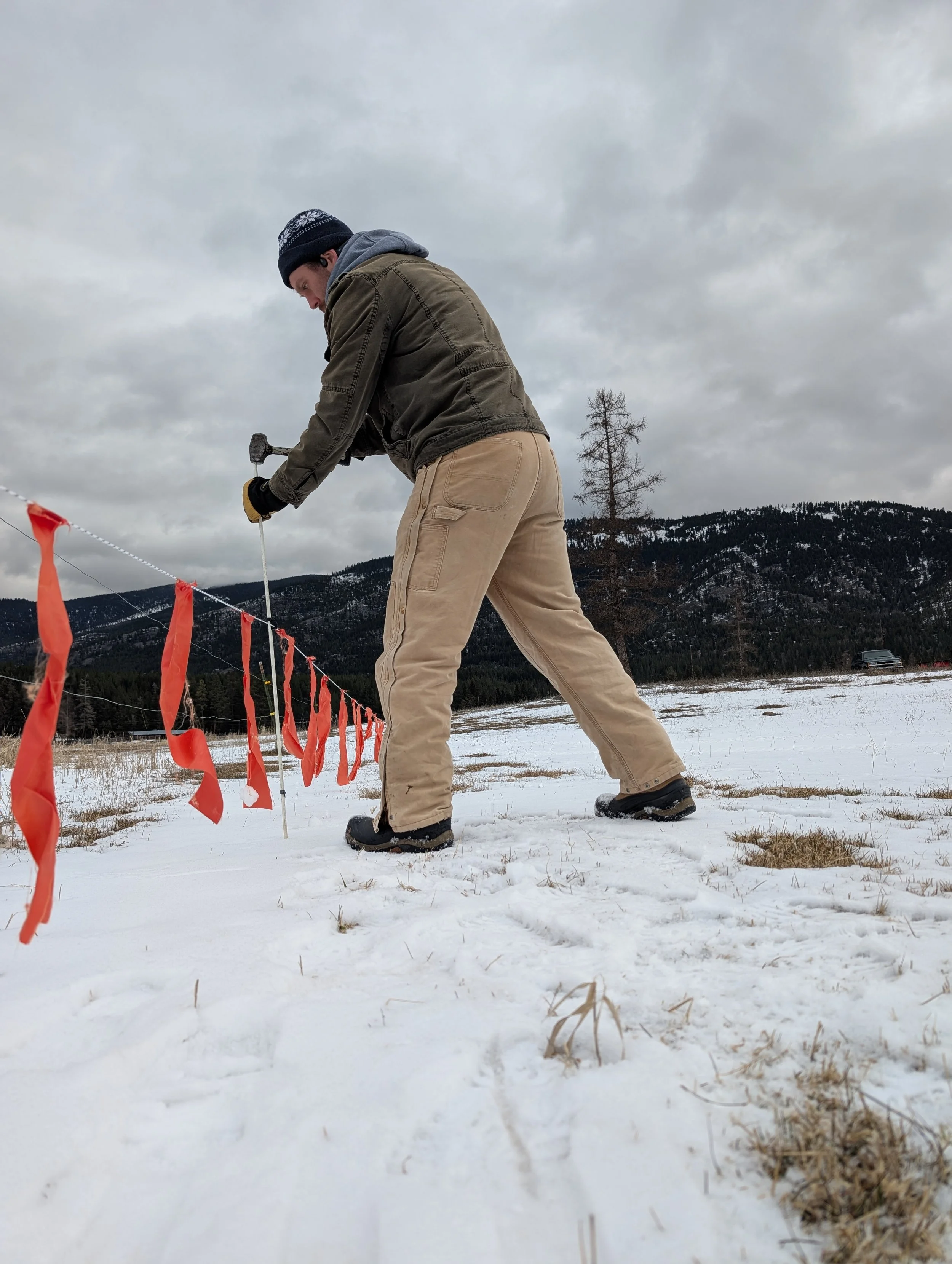
Ryan installing fladry on a ranch in Northwest Montana.
Why does fladry work to deter wolves?
The flags are creating a visual and psychological barrier for wolves. Wolves are very cautious around new movements or something that's out of the ordinary. Wind will blow the flags around, and the motion and crazy directions triggers an avoidance behavior in them.
Why not use it year-round to protect livestock in pastures?
It is definitely temporary. Wolves tend to get skittish around new things. As a result, over time, they're like, “oh, that's a flag,” or “oh, this isn't really scaring me anymore.” They'll come in and be comfortable around it.
Since it’s only a temporary tool, should you build a permanent fence to keep wolves out instead?
It really depends on what kind of agricultural practices the rancher takes on. There are a lot of different methods. Every rancher is a little different. A rancher might be on public land. Or a rancher might use select pastures, but they can be in rugged terrain, so a permanent fence can be costly and time intensive to maintain.
Temporary tools are fast to deploy and at a lower cost. Fladry does take time, but if you work with NGOs like ours, we can help you out. Permanent fence can work well if you have a distinct, small pasture. Maintenance and upkeep are the biggest things whether you use fladry or a permanent electric fence.
What happens once fladry is removed? Do conflicts come back?
Usually, we install it around calving or lambing time. That's when cows and sheep are most vulnerable. That’s why wolves may try to find that opportunistic time to get to them, especially the calves or lambs, because the livestock can’t defend themselves very well. The fladry is there to buy time for the calves and their mothers to grow and get more stable, and build up strength so they can defend themselves more.
Fladry can also shift wolves’ movement. Once fladry comes down, wolves might not even be in the area anymore because they’ve moved on.
Why might a rancher not want to use fladry?
The big thing with a lot of people not wanting to use it is that it can be labor intensive—the installation and maintenance. That’s why we often do or help with the installation. But also, there’s skepticism around it. It's really easy for some producers to think there’s no way flags will keep wolves away, or that it’s not going to work with their set up.
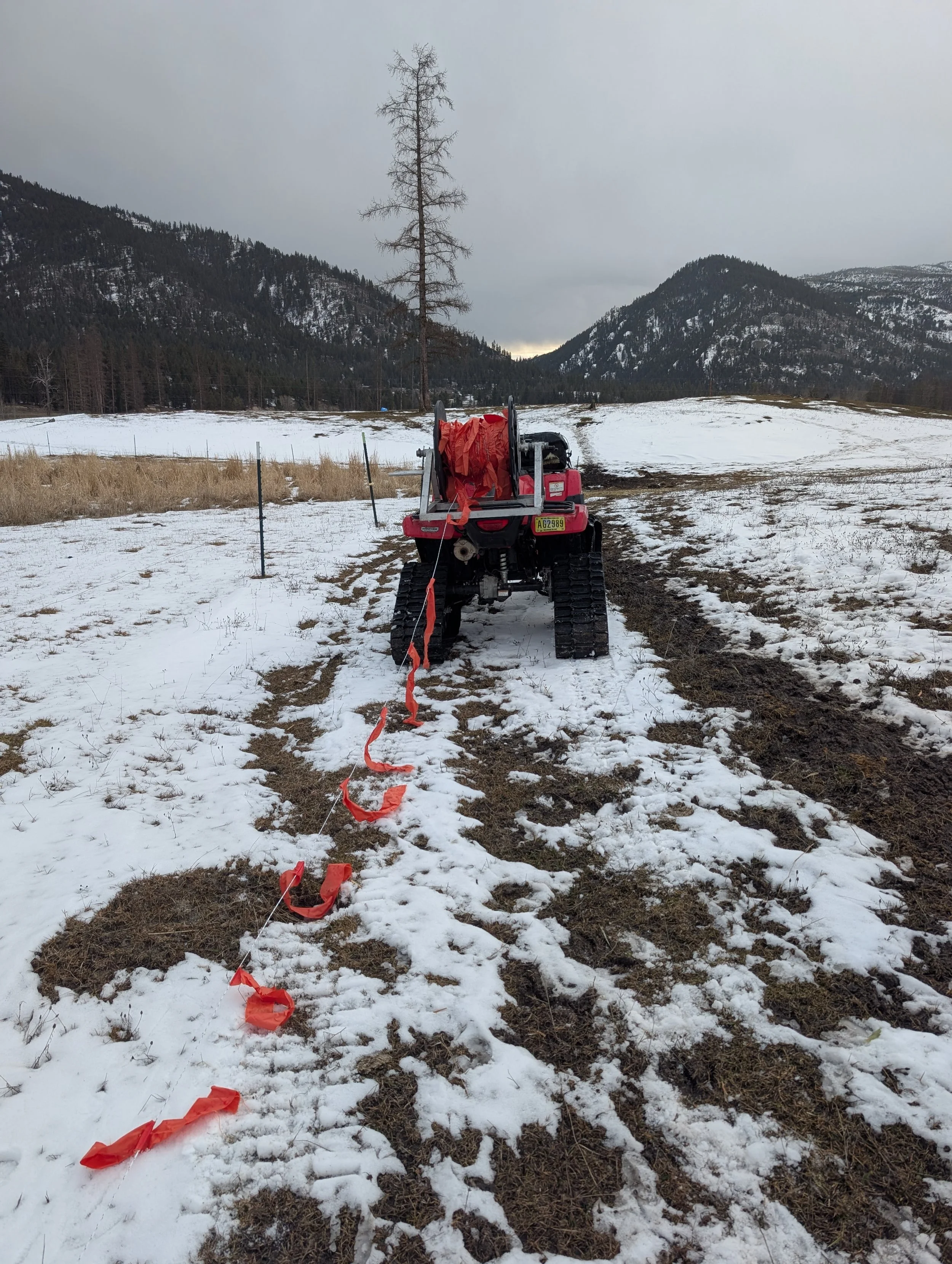
Using an ATV and storing fladry on a spool can speed up the installation process.
In some cases, hesitation isn’t without merit. It can take a lot of finagling to figure out how to make it work for a certain situation or landscape features. Sometimes fladry doesn’t work as well because wolves have seen it before, if it’s been up too long. If a wolf is desperate enough for food it might just jump over or go through the line. With that in mind, sometimes we use multiple tools to go along with fladry, like flashing lights or radios. But building a relationship and trust with a rancher can often address skepticism or frustration. If I came in on day one and said, “Hey, you need to do all these things [to prevent conflicts],” they’re still going to be skeptical about it. But if the rancher knows me and we have a good relationship, they might be willing to at least experiment with fladry.
What’s the installation process like, and how hard is it to maintain?
It can be done in one or two days, depending on how large the pasture is. If you have ATVs or snowmobiles, that makes it a lot easier. Terrain can also dictate how long it takes.
The two biggest things for maintenance are to make sure it’s electrified [when using electrified “turbo” fladry] and monitor it for damaged flags. Maintenance can always be a challenge, having to check for snags or tangles, replacing damaged flags. Sometimes cows or calves get interested in them and chew on them unless you install them in a certain way; if there’s a fenced area, you put the fladry outside of it.
If you’re a spring calver, you have to pay attention to snow. The flags need to be freely flying in the wind. You don’t want them to touch the ground, especially when there’s snow. If they touch the ground and there’s a little freeze-thaw, the flags will freeze to the ground and won’t move at all, so they become useless.
If you’re a fall calver, you have to make sure vegetation’s down. Having all that grass grow up and hit the lines can draw on the [electric] charge or tangle the flags.
Why is fladry worth using, despite the challenges?
It can allow you to have a successful calving period, which can already be a challenge. If you try fladry and you don’t have any wolf issues, you can say it’s because wolves did or didn’t come in, but either way, you still have your calves that you’re hoping for to help your ranching operation.
And you don’t have to do it alone. That’s the thing about fladry projects. In most situations, it’s a partner effort, and there are experts that can help.