

Getting “Bear Smart” from Montana to Italy
This September, two People and Carnivores staff members, along with a handful of Italians, found themselves watching wild boars forage in Italy’s Apennine Mountains east of Rome. Suddenly, one of our field specialists spotted something through her binoculars that didn’t fit with the group of boars.
It was a Marsican brown bear—a critically endangered species that exists only in central Italy.
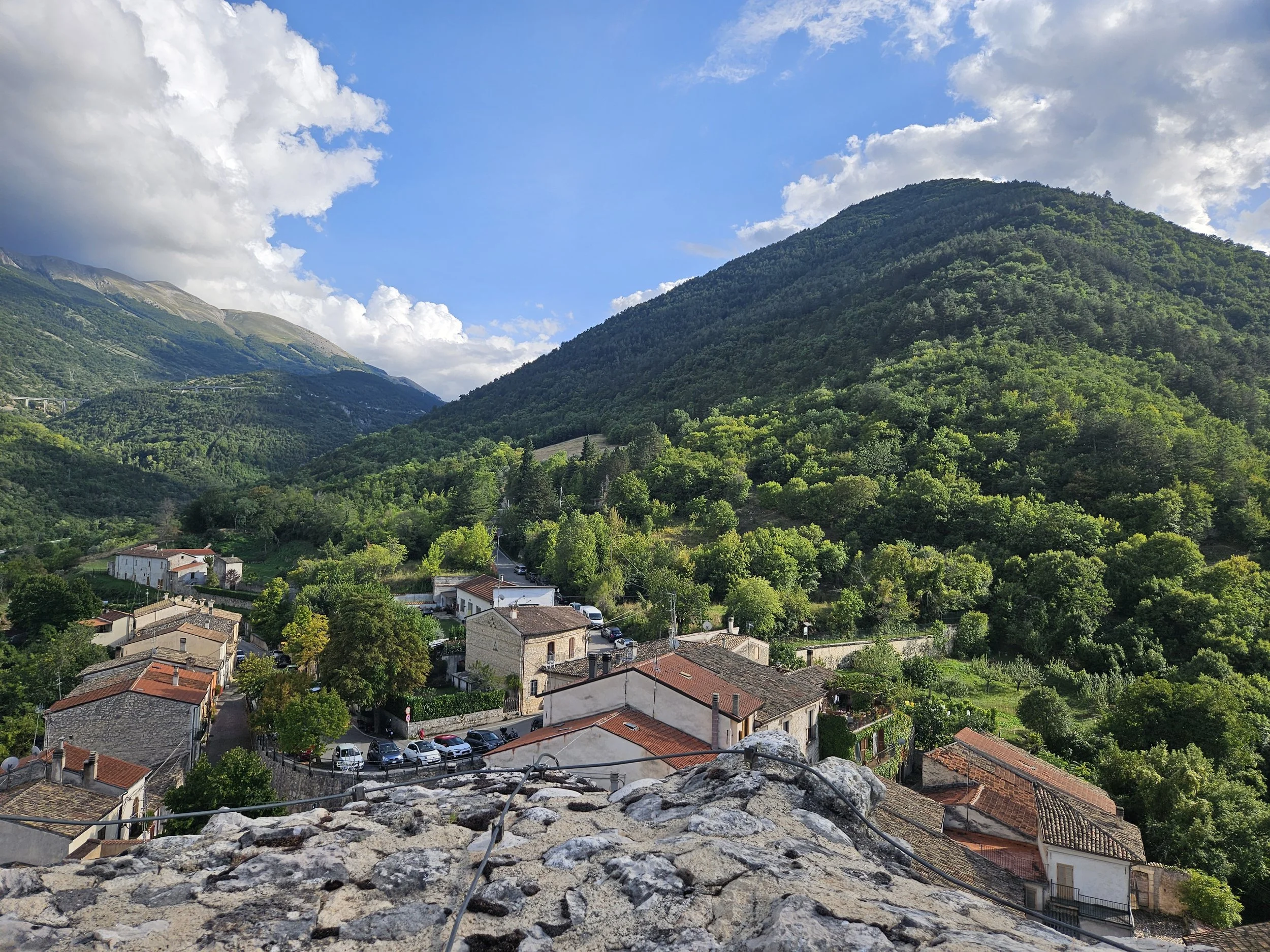
In early 2025, P&C was asked by Italian bear advocates working as part of Rewilding Europe and Rewilding Apennines to travel to Italy’s Abruzzo region to evaluate several Bear Smart Communities in Marsican brown bear habitat. P&C Conflict Prevention Specialists Amber Kornak and Kim Johnston spent a week visiting towns that are working to clean up bear attractants to better live alongside these bears. The visit not only allowed us to share our experience in preventing human-bear conflicts, but it also gave us insight into common challenges and inspiring ways to engage communities in this work.
The Bear Smart approach provides communities with a framework to understand why human-bear conflicts are occurring in their areas, create plans to prevent conflicts, and strategically implement projects. Rewilding Apennines is working with 16 communities in central Italy to apply this model. We evaluated programs in seven of these communities, pulling on our experience helping towns in the Northern Rockies use this approach. (See one story here.)
Conflict-Prevention Tools from Here to There
Our Conflict Prevention Specialists found some familiar situations in Italy: bears getting into chicken coops, eating from backyard fruit trees, and accessing garbage. They also found some familiar conflict-prevention tools like bear-resistant garbage cans, electric fencing, and livestock guardian dogs.
But there were some differences in tools and applications. For example, rather than using electric fencing around chicken coops, some residents used metal coops, combining the idea of a bear-resistant container with a livestock enclosure. Birds could be safely locked in at night, keeping bears out.
Electric fencing was sometimes used to block off the easiest-access points to an attractant, rather than enclosing it entirely—a practice that would not work in the U.S.
Hard-sided, plastic bear-resistant garbage cans used by many U.S. residents were uncommon, and metal cans were favored in Italy. These cans are sturdier, and more likely to hold up against bears long-term. But they’re also more expensive and therefore less accessible to most residents.
The town of Lecce nei Marsi is trying out some new technology: a microchipped garbage can that only opens for those with a corresponding keycard. Because of the microchip and keycard, it can’t be overstuffed by seasonal residents and visitors who might not know about the importance of securing garbage. The can also automatically closes, eliminating potential user error.
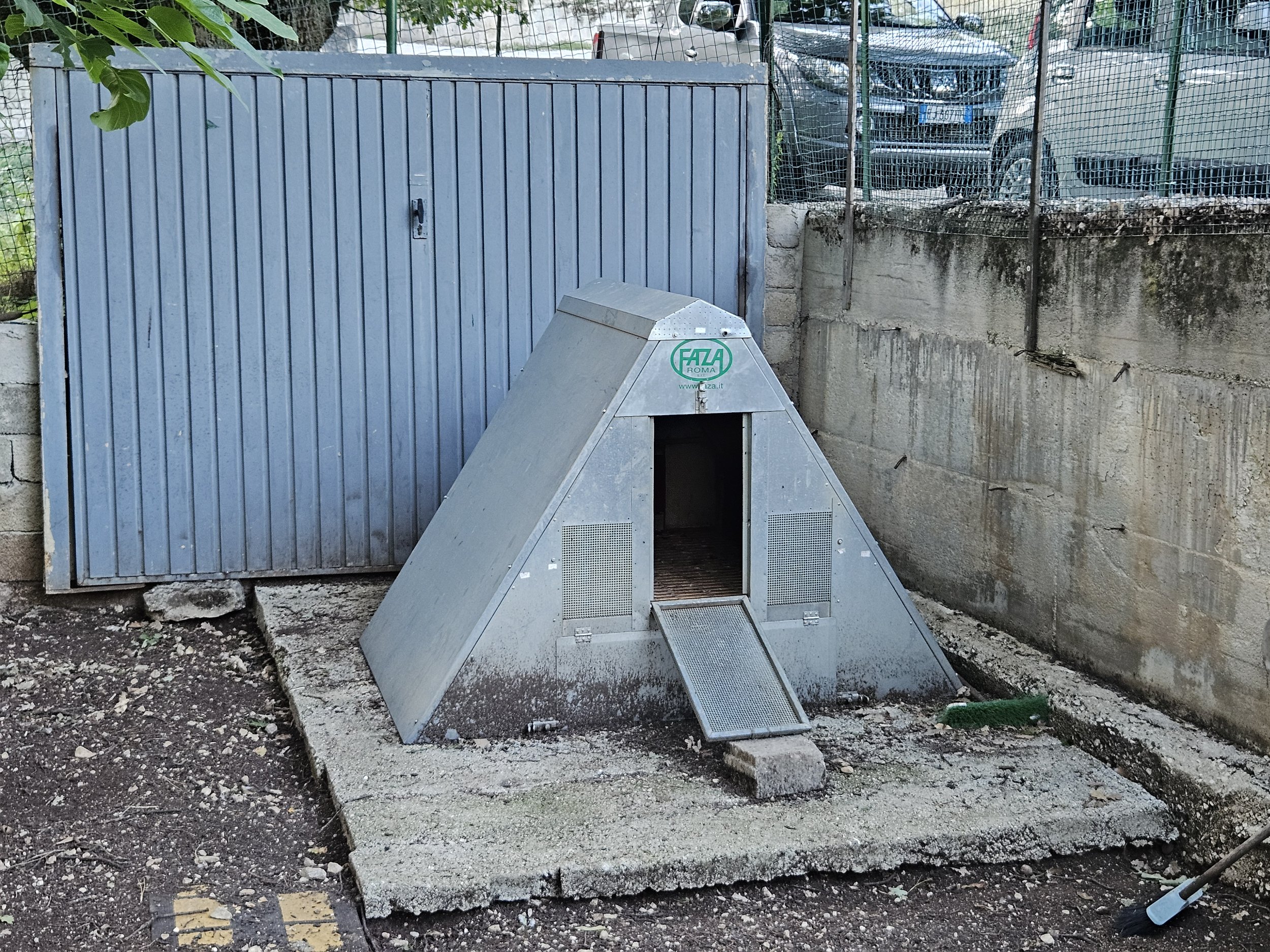
This bear-resistant chicken coop is made from metal, and is closed each night.
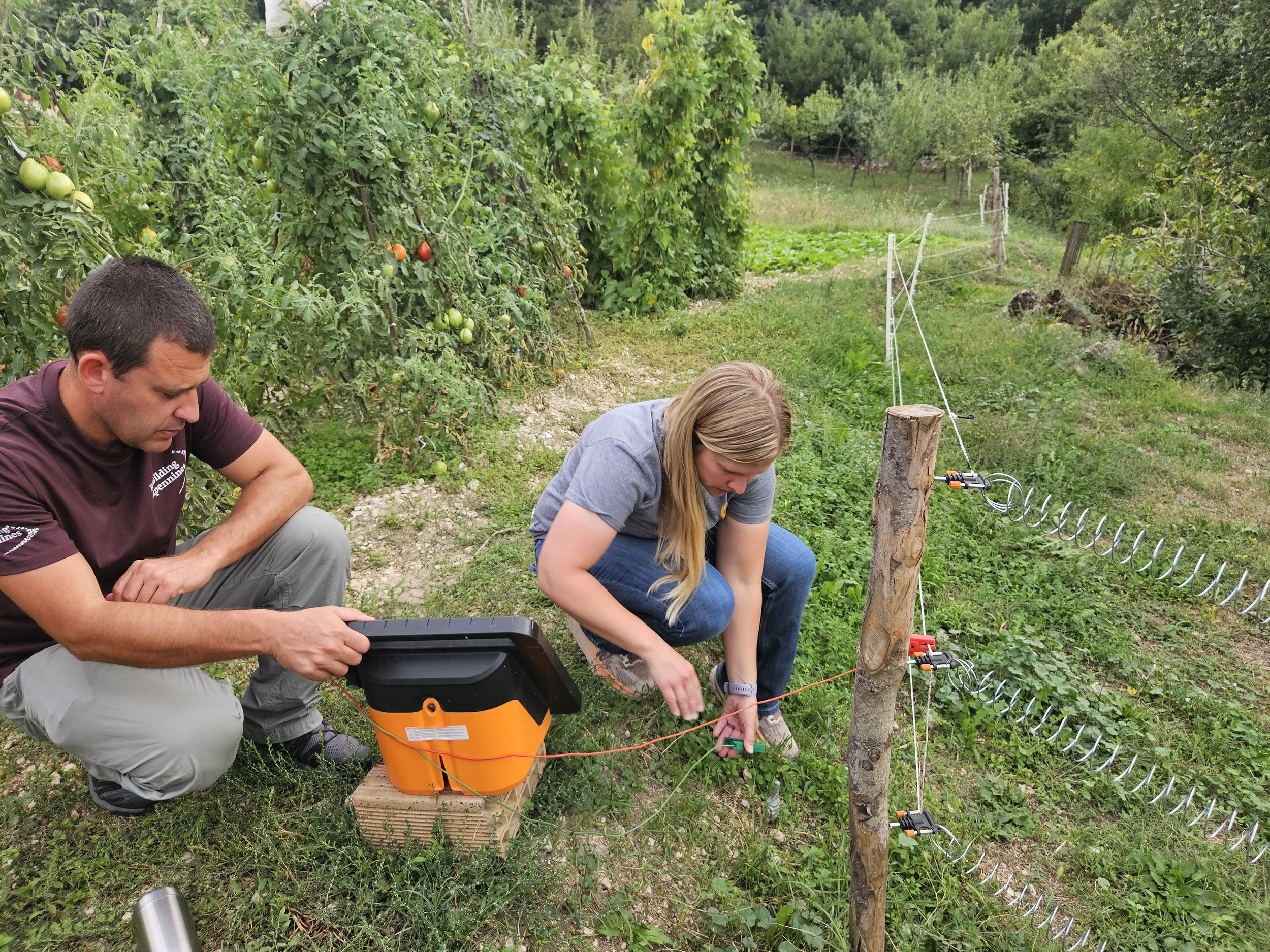
Electric fencing keeps bears from accessing fruit trees.
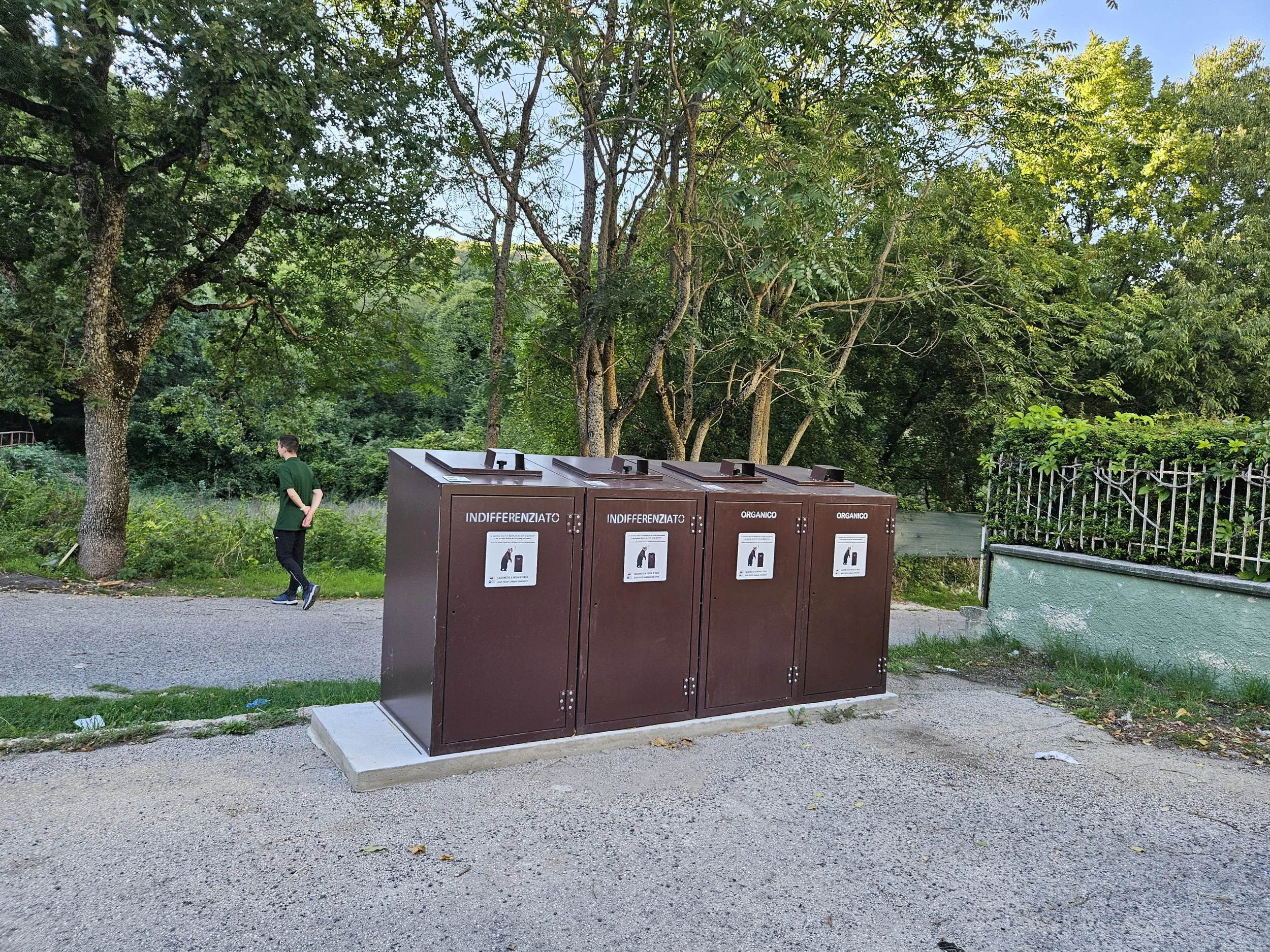
Metal bear-resistant garbage cans are installed throughout communities.

This garbage can requires a keycard to open it, preventing overfilling.
Communities Coming Together
When it came to getting community members to engage in conflict-prevention, there were some challenges we’ve seen in our own work.
Sharing bear safety basics, like how to avoid attracting bears to a property, is a constant necessity. For example, residents would leave food out for cats and other animals but didn’t realize this would also draw in bears. In the U.S., we often see this with birdfeeders.
Despite increased education efforts in some communities, seasonal residents and tourists—of which this area sees many—are harder to reach with information on bear safety. (We’ve tried to reach these audiences with materials like our vacation rental bear safety kits.)
Areas in and neighboring national parks where Marsican brown bears are more abundant tended to be more engaged in preventing conflicts. Areas with less bear activity, but still in bear habitat, were more hesitant. We’ve seen this in areas where grizzly bears are returning after a century’s long absence. We want to prevent, rather than respond to, human-grizzly bear conflicts as much as possible. But if conflicts aren’t happening yet, people aren’t as motivated or able to invest time and money in conflict-prevention tools and practices.
Regardless of these challenges, the work these communities are doing is inspiring. Community members are coming together to form committees, assess why conflicts are occurring, and create action plans that make sense for them and their neighbors.
Communities are engaging in innovative programs, like one that supports local businesses and gets the word out about bears. Rewilding Apennines sells local businesses’ wares at farmers’ markets, while talking with customers about the Bear Smart Community model. Businesses are involved, too: our Conflict Prevention Specialists visited one BnB that talks to its guests about Marsican brown bears while they cook breakfast, spreading the word about the species.
Some communities host events and workshops to share bear safety information. One village, Vastogiradri, has a bear festival, similar to the “bear fairs” we host in the U.S. The festival is a celebration of the Marsican brown bear and includes a nature walk, documentaries, theatrical performances, food, and games.
And support for conserving Marsican brown bears is physically visible: statues and murals of the bears are abundant.
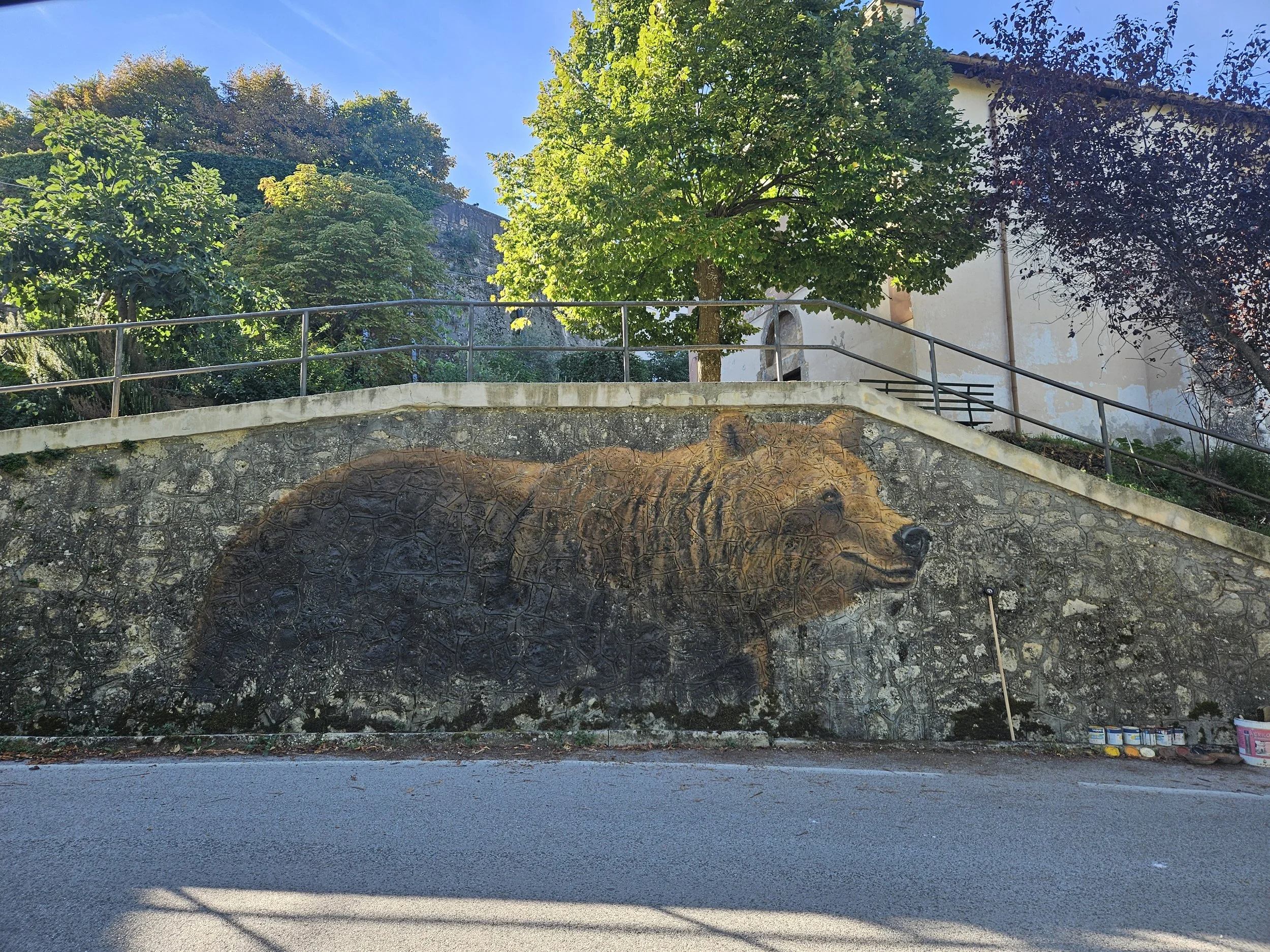
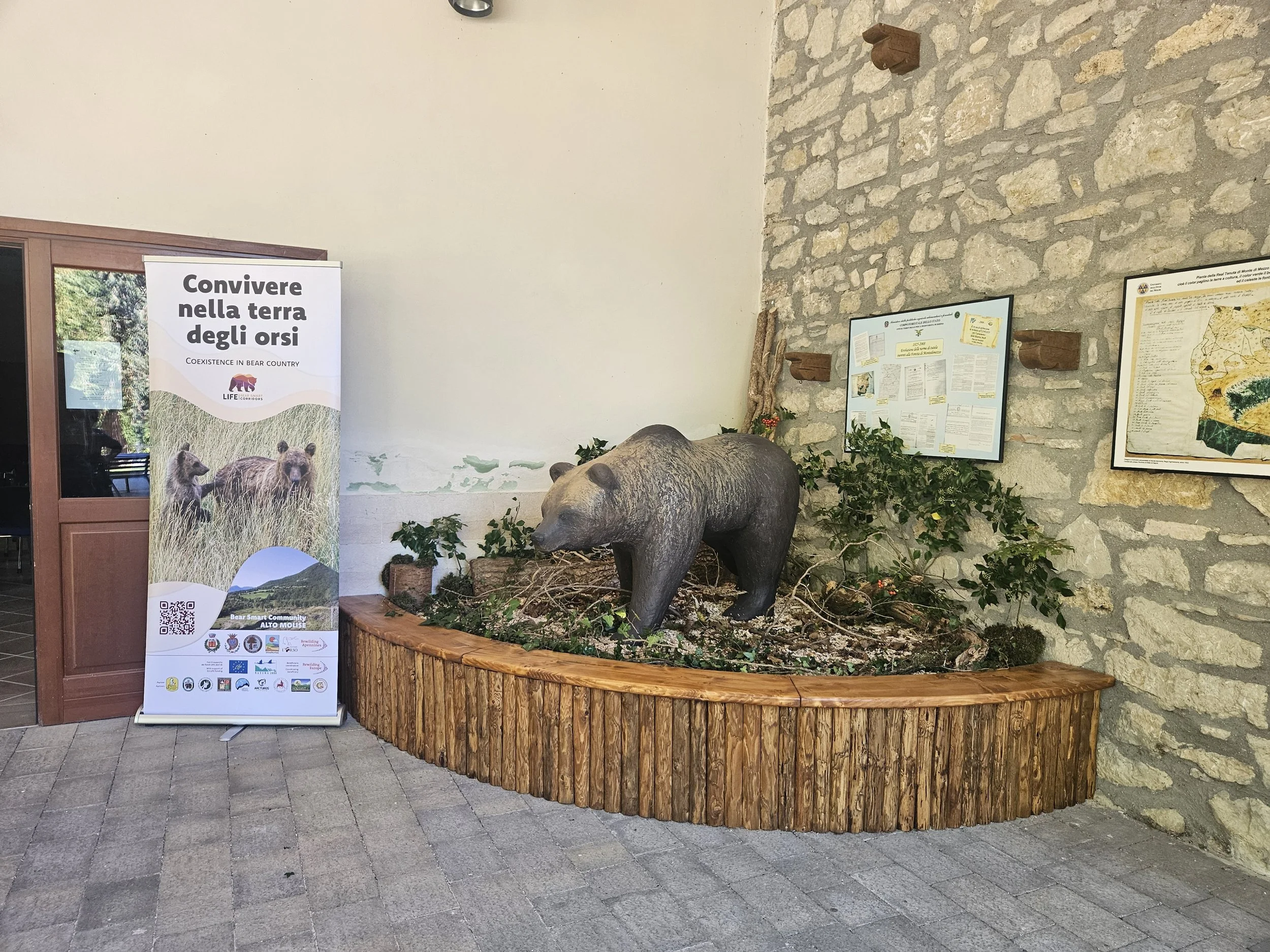
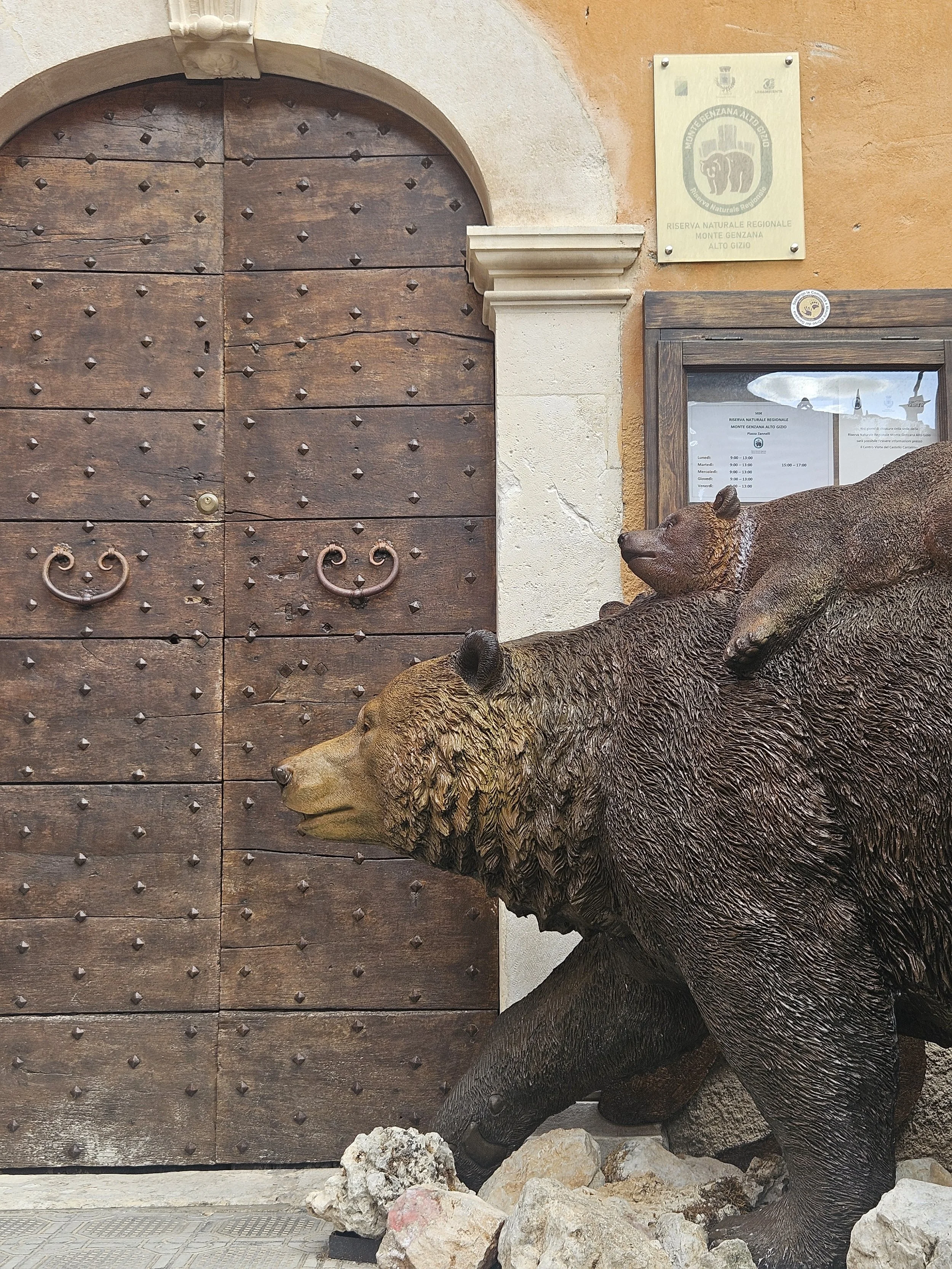
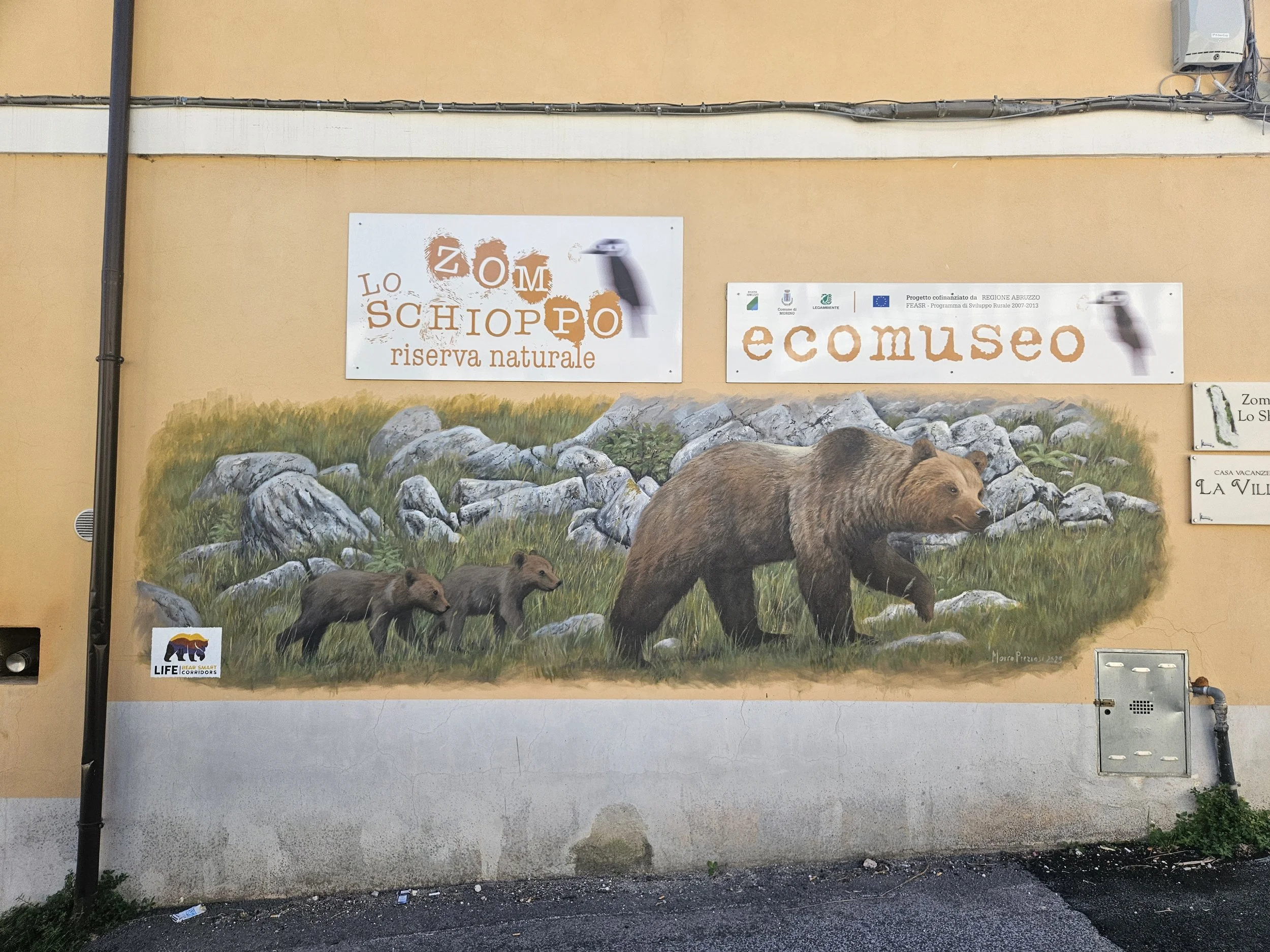
These bears are not only a proud symbol for the region, but offer a chance at a connected, healthy landscape. Like their Northern Rockies cousin, the grizzly bear, Marsican brown bears are an umbrella species. If there’s room for them to roam and find food, there’s habitat for other native species to survive, too. The 16 communities working to become Bear Smart are on their way to making this a reality by coming together to clean up attractants and learn about the species.
People and Carnivores will share a report with our observations and analysis with Rewilding Apennines and their partners to assist them as they continue their efforts.
Learn more about Rewilding Apennines and the Marsican brown bear here. Find out more about P&C’s Bear Smart efforts here.
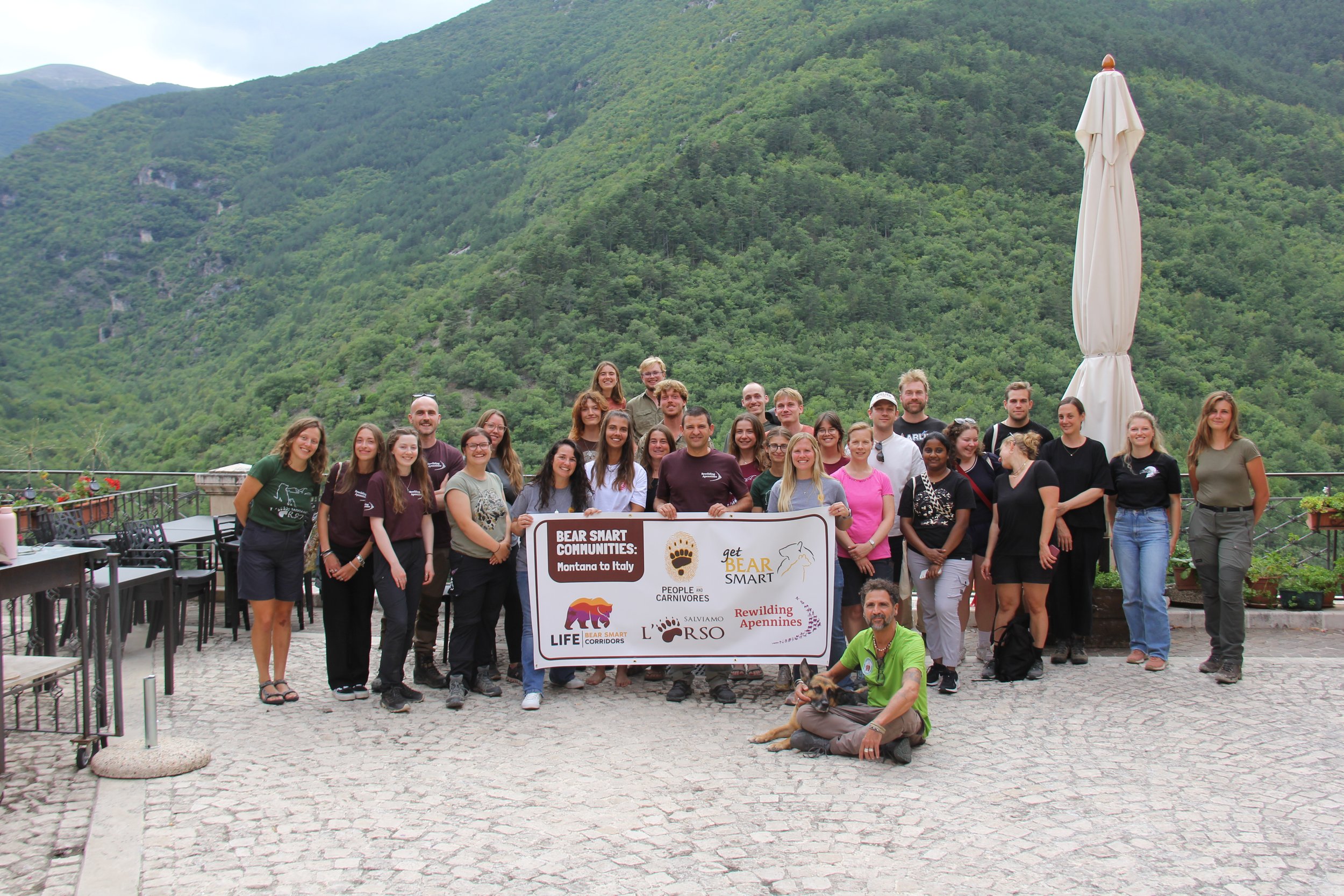
P&C Conflict Prevention Specialists stand with representatives from Italian conservation organizations, including Rewildling Apennines